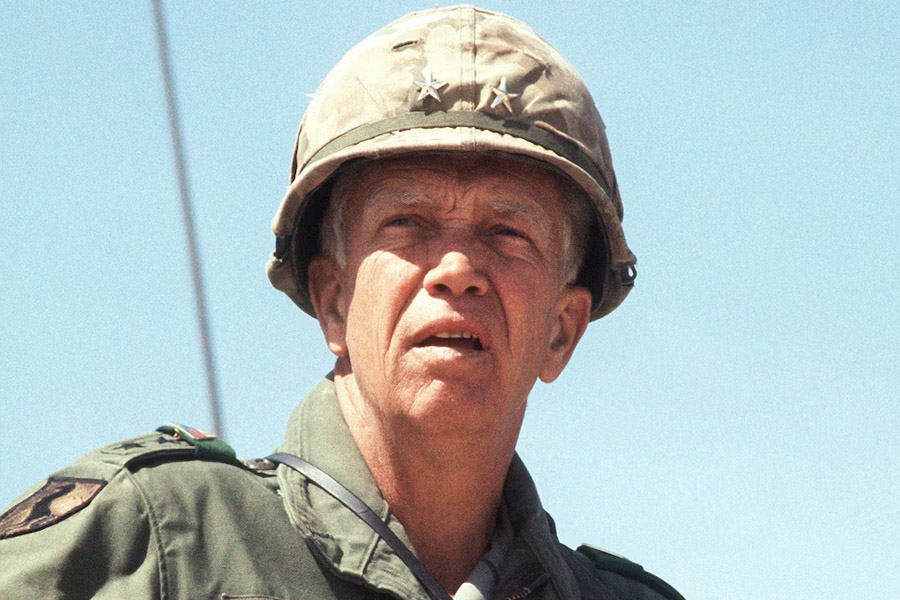
An Admiral in the Family Album
When I first set out to sketch the life of William Howard Duvall, I found myself paging through a distinctly American story. It is the story of a career naval officer who rose to the flag ranks, steered ships and people through the perils of World War II, and returned home to a family that would shape American arts and letters in its own way. He is best known today as the father of actor Robert Duvall, yet he stands on his own as a disciplined, decorated leader whose life traces the long arc of 20th century service.
Born around 1903 and passing in 1984 at about 80 years old, Duvall’s timeline stretches from the biplane era into the age of nuclear vessels. There is a quiet nobility to that range. He grew up alongside the very idea of American global sea power, and then he helped define it. In the annals of naval history, not every leader leaves a theatrical signature. Many leave something subtler. In this case, steady seamanship and a well regarded reputation earned in the gray North Atlantic.
Early Bearings
Public records place Duvall’s birth around 1903, with the specifics of the day and month often omitted in summaries. That is a familiar haze in older biographical sketches. Before World War II, he worked through the long apprenticeship of the naval officer’s life, climbing the ladder of responsibility that moves from shipboard station to department head to command. I picture the curve of his early career like a slow, controlled rise on a seaborne swell, every step earned through practical judgment, navigation, and the management of sailors.
These prewar years are rarely the stuff of headlines, but they are the crucible. The peacetime Navy demands routine excellence. It turns competence into reflex. Those habits would matter when the Atlantic grew hostile.
War at Sea
During World War II, William Howard Duvall served in escort and destroyer commands in the North Atlantic. The work was relentless. Convoy duty can look monotonous on paper. In reality it is a chess match played across thousands of miles. U-boats, weather, radio silence, and the fatigue of long watches press down on crews and commanders alike. In that arena, Duvall distinguished himself. He led the kinds of formations that kept the arteries of the war effort flowing. When merchant ships arrived intact, it meant factories stayed open, troops were supplied, and civilians avoided hunger.
He earned the Legion of Merit for that service. Awards do not capture the long hours of uncertainty that produce them, but they do signal that peers and superiors saw exceptional merit in his leadership. To command a destroyer squadron or escort group in the Atlantic was to accept responsibility for other people’s futures. It meant making decisions when visibility was poor and the stakes were life and death. Duvall carried that burden and carried it well.
Flag Rank and After
The postwar Navy returned to routine, then tightened again during the Cold War. Within that rhythm, Duvall advanced to flag rank and retired as a Rear Admiral. To make admiral is to pass through several invisible tests. You must be good, of course. You must also be trusted. Flag officers are custodians of scarce resources and national intentions. They speak for the service in ways both formal and implicit. By all accounts available in public summaries and obituaries, Duvall met that test with the steadiness that had marked his wartime work.
He died on February 14, 1984, leaving a record that is compact in prose but wide in implication. Not every life needs a long book to be deeply legible. Sometimes a few clear milestones, coupled with the testimony of service and the recollections that survive in family and institutional memory, carry the full weight.
The Household Behind the Uniform
Every career like this one is anchored by family. William Howard Duvall married Mildred Virginia Hart, remembered as an amateur actress with a warm dramatic streak. Through her, the family lore sometimes emphasizes ties to established Virginia lines. I think of that as the roots and the wings. Roots in old American soil. Wings in a creative temperament that would later bloom in their son.
They raised three boys. The eldest, William H. Duvall Jr., carried his father’s name forward. The middle child, Robert Seldon Duvall, was born in 1931 and would become one of the great American screen actors. The youngest, John Duvall, born in 1934 and later an entertainment lawyer, rounded out a trio that knew both the order of a naval household and the improvisation of artistic life through their mother.
Robert has often described himself as a Navy brat. That shorthand sums up a childhood that mapped itself onto bases, postings, and the rhythms of military communities. Annapolis and the culture around the Naval Academy cast their own spell. For a young person, such places are part school, part stage, part myth. The sharp lines of uniforms and the choreography of ceremonies can leave a mark that lasts a lifetime. In the Duvall home, that discipline met a performer’s curiosity. You can sense both forces in the way Robert Duvall later worked on screen. Precision and instinct. Form and freedom.
A Timeline in Broad Strokes
It helps to see the milestones in sequence. Around 1903, a birth in an America still finding its modern form. The interwar Navy fostering skill and character. The 1940s bringing conflict, convoys, and command responsibilities in the North Atlantic. An earned medal for meritorious service that points to reliability under pressure. Postwar advancement into senior leadership and a final rank of Rear Admiral. Then a quiet passing in 1984, his legacy divided between the Navy’s institutional memory and the family stories that persist in public and private remembrances.
What We Can and Cannot Know
With figures like William Howard Duvall, it is common to encounter gaps in the record. Official summaries tend to spotlight rank, roles, and decorations rather than day by day personal narrative. His exact birthdate is not always listed in public overviews. There is no credible public estimate of his net worth, which makes sense for a career military officer whose wealth would not have been a matter of public interest. There is also no credible scandal attached to his name. His footprint is that of a respected professional, the kind of person institutions are built to nurture and promote.
How He Is Remembered Today
In recent years, William Howard Duvall appears most often as a figure in the backdrop of his son’s biographies and in the preservation of naval history and memorials. These mentions are concise. They repeat, almost like a refrain. Rear Admiral. World War II service. Legion of Merit. Father to Robert. Husband to Mildred. It is spare, but not thin. Think of it as the clean lines of a ship’s silhouette against the horizon. You can identify its class and purpose from the essentials.
FAQ
Who was William Howard Duvall?
He was a United States Navy officer who rose to the rank of Rear Admiral and earned the Legion of Merit for his World War II service in escort and destroyer squadron commands. He is also known as the father of actor Robert Duvall.
What did he do during World War II?
He commanded escort and destroyer formations in the North Atlantic. This meant safeguarding convoys, countering submarine threats, and keeping the logistical lifelines of the war open. His performance in these demanding roles earned high commendation.
What awards did he receive?
He received the Legion of Merit, a decoration granted for exceptionally meritorious conduct. In his case, it recognized the effectiveness and leadership he showed during Atlantic convoy and escort operations.
When was he born and when did he die?
Public records indicate he was born around 1903. He died on February 14, 1984, at roughly 80 years old.
What was his final rank in the Navy?
He retired as a Rear Admiral, a flag rank that reflects senior leadership responsibility and a distinguished career.
Who were his family members?
He was married to Mildred Virginia Hart, remembered as an amateur actress. They had three sons. The eldest, William H. Duvall Jr., carried his name. The middle son, Robert Seldon Duvall, became a celebrated actor. The youngest, John Duvall, worked as an entertainment lawyer.
How did his career influence his family life?
His service meant a household shaped by military schedules, discipline, and the culture of naval communities. That environment blended with Mildred’s artistic sensibility, giving their children both structure and creative spark. Robert Duvall has described himself as a Navy brat, reflecting how closely his childhood tracked with the life of the service.
Is there a detailed authorized biography of him?
There is no widely circulated long form biography that focuses solely on him. Most available information appears in naval records, obituary notices, and as context in profiles of his son.
What do we know about his ancestry and family roots?
Family histories often note that the Duvall line reaches back to early American settlers, and that Mildred’s lineage has ties to well known Virginia families. These details provide texture to the family story, though the core of his public profile remains his naval service and leadership.
Are there credible net worth figures for him?
No. As a career military officer who was not a public celebrity in his own right, there are no reliable public net worth figures. Financial speculation would not be meaningful or appropriate.
Was he involved in any scandal or controversy?
No credible record ties him to scandal. His public footprint is defined by professional service, a respected military career, and his role within a well known American family.