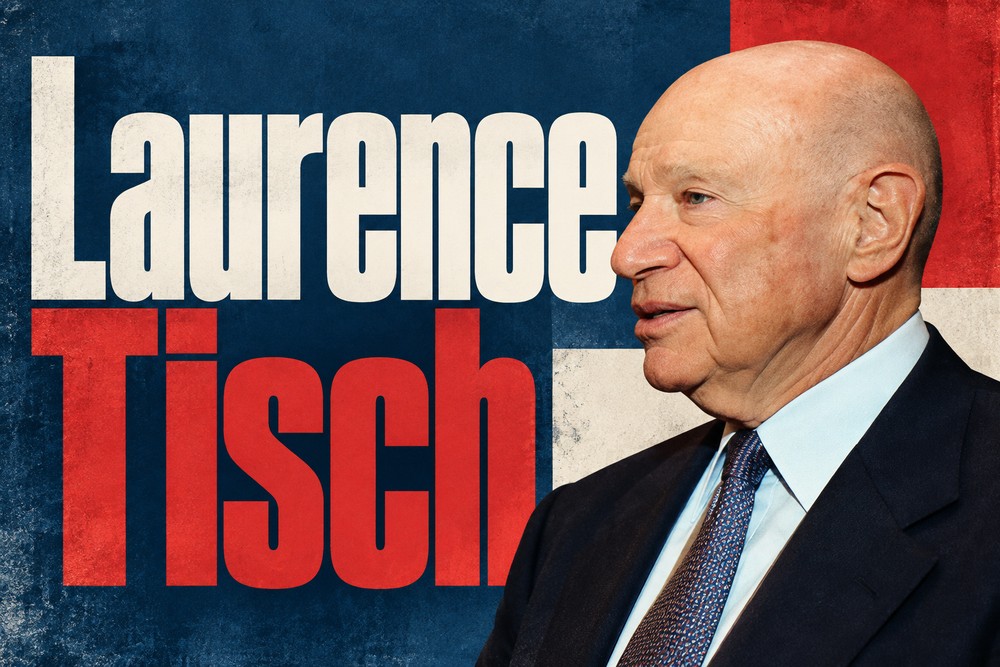
A Brooklyn beginning
I imagine Laurence Alan Larry Tisch entering company with a slide rule and a stopwatch. He was born in Brooklyn in 1923 to Al and Sadye Tisch, who valued hard work. He graduated from NYU as a youngster and earned an MBA at Wharton while most of his peers were starting college. That early lead mattered. He had time to try, purchase, and study cash flow and risk before his peers got their first job.
Building Loews the long game
The first bold step came in 1946 when he bought a 300 room winter resort in Lakewood, New Jersey. Hotels taught him levers and margins. He carried those lessons into a decade of acquisitions that culminated in 1959 with the purchase of Loews Theatres. The name would become a platform and a promise. Alongside his brother Preston Robert Bob Tisch, Laurence turned Loews from a movie chain into a diversified holding company, a patient compounding machine that owned hotels, insurance, energy, and more. The brothers were methodical investors. They did not chase fads. They rotated capital, trimmed fat, and insisted on cash generating assets that could endure difficult cycles.
The CBS years a shareholder champion and a lightning rod
In 1986, he shifted from the quiet world of conglomerates to the glare of network television. He bought a large stake in CBS to ward off hostile raiders and soon took the helm as president and chief executive. What followed was a masterclass in austerity and a storm of criticism. He sold noncore assets like the record and magazine units and squeezed costs across the network. Shareholders saw value unlocked. Journalists and producers saw budgets shrink. Sports fans watched CBS lose marquee rights as rivals opened their wallets. To some, he was the adult in the room who saved a storied brand from corporate raiders. To others, he was the accountant who starved a creative engine.
He held the line for almost a decade. In 1995, Westinghouse bought CBS in a deal that rewarded his stake handsomely. The exit validated his thesis about value and focus. It also cemented his reputation as a disciplined, unsentimental steward who could change the trajectory of institutions through relentless attention to numbers.
Family branches and public roles
Laurence married Wilma Billie Stein in 1948. Their home became the root system for a sprawling family tree that would shape business, sports, hospitality, and public life.
- Andrew H. Tisch emerged as a senior leader at Loews and has long served as co chair, helping guide the company through cycles and portfolio shifts.
- Daniel R. Tisch built a career in investing and family capital management and became active in civic and university life, including work with NYU. His son David Tisch is a well known early stage investor and entrepreneur.
- James S. Tisch took on top executive duties at Loews and has been central to the corporation’s long run strategy. His daughter Jessica Tisch is a New York City public official who has held senior posts in technology and city services, including commissioner of sanitation.
- Thomas Jonah Tisch has operated as a private investor and partner in ventures out of the public glare.
The branches extend further. Laurence’s brother Bob co led the family enterprise and left his own signature on New York philanthropy and sports. Bob’s children include Jonathan Tisch, the longtime leader of Loews Hotels and a prominent civic figure, and Steve Tisch, the film producer and co owner of the New York Giants. The family name also carries influence in education policy through Merryl Hiat Tisch, a prominent education leader and a member of the extended family by marriage. When Laurence died in 2003, he was survived by four sons and an expansive third generation that included fifteen grandchildren. The modern Tisch clan is more like a small archipelago than a single island, with each branch managing its own currents while sharing an origin story.
Wealth and philanthropy
Laurence Tisch was a billionaire by many public estimates in the later chapters of his life. The number mattered less than the philosophy behind it. He treated capital as a tool to build resilient institutions and to fund causes through thoughtful philanthropy. The family name is inscribed on campuses, cultural centers, and hospitals. The Tisch legacy in arts education is particularly visible, a testament to a belief that culture and commerce can reinforce each other when both are nourished.
Temperament and method
Some executives seduce markets with charisma. Tisch preferred silence to showmanship. He was known for precision, thrift, and a willingness to simplify complex empires until the earnings power could be seen in a single glance. He valued liquidity and optionality. He believed in buying businesses with cash flow and in pulling weeds early. There was little romance in his approach, yet there was real craft. He paced deals like a chess player who could see three positions ahead. When he entered CBS, he read a ledger where others saw a studio lot. That perspective produced gains and bruises in equal measure.
Timeline in brief
-
- Born in Brooklyn to a family with immigrant grit and merchant habits.
- Early 1940s. Graduates from NYU as a teenager and completes an MBA at Wharton soon after.
-
- Buys a New Jersey resort that becomes a proving ground for his investment style.
-
- Acquires Loews Theatres with his brother, creating a corporate platform that will expand for decades.
-
- Takes a major stake in CBS and begins a turbulent tenure as chief executive.
-
- Exits CBS through a sale to Westinghouse, crystallizing years of shareholder value.
-
- Dies in New York City from gastroesophageal cancer, leaving a wide family and a complex legacy.
Legacy in media and business
The ledger on Laurence Tisch contains a paradox that I find instructive. He protected value by selling assets that some saw as the soul of a media company. He restored balance sheets while risking the loss of intangible advantages like prestige, talent, and tradition. He showed that discipline can be a growth strategy when applied with patience and nerve. He also showed that numbers can only capture part of a story. The rest lives in the culture of a company and the loyalty of the people who make the product.
The family that followed him has diversified the meaning of the Tisch name. Some carried forward the Loews enterprise. Some built careers in hospitality, sports, venture capital, and public service. In their collective work you can still hear the quiet metronome that defined the patriarch. Measure. Decide. Act. Then repeat.
FAQ
Who was Laurence Tisch
He was an American businessman and investor who helped build Loews Corporation into a diversified holding company and later served as president and chief executive of CBS from 1986 to 1995.
What is Loews Corporation
Loews is a New York based conglomerate with roots in theaters and hotels that expanded into insurance, energy, and other industries. Under the Tisch brothers, it became known for disciplined capital allocation and long horizon investing.
Why was his CBS tenure controversial
He pursued cost cutting and asset sales to protect the company from hostile takeovers and to boost returns. Supporters point to the strong shareholder outcomes. Critics argue that reduced budgets and the sale of noncore units weakened news operations and led to the loss of key sports rights.
Who are the most prominent family members today
Among many, Andrew H. Tisch and James S. Tisch are longtime leaders at Loews. Jonathan Tisch is synonymous with Loews Hotels and civic leadership. Steve Tisch is a film producer and co owner of the New York Giants. In the third generation, David Tisch is a noted venture investor and Jessica Tisch is a senior New York City public official.
How large is the extended family
At the time of his death, Laurence Tisch was survived by four sons and fifteen grandchildren. The family spans business, hospitality, sports, philanthropy, and public service.
What did he study and how early did he graduate
He completed an undergraduate degree at NYU at an unusually young age and earned an MBA from the Wharton School soon after, giving him a head start that he leveraged into early acquisitions.
When did he pass away and from what
He died in New York City in 2003 from gastroesophageal cancer.