A Young Life Set Within a Storied American Tapestry
Owen Patrick Kennedy occupies a gentle corner of a very large stage. He was born on April 15, 2012, and from the start he has been part of a household with busy calendars, public service roots, and the everyday routines that define childhood. What I find compelling about Owen is not a career or a spotlight. It is the way his place in the family illuminates the living continuity of a name many Americans know, yet he remains simply a child with parents, sisters, and a brother who make up his world.
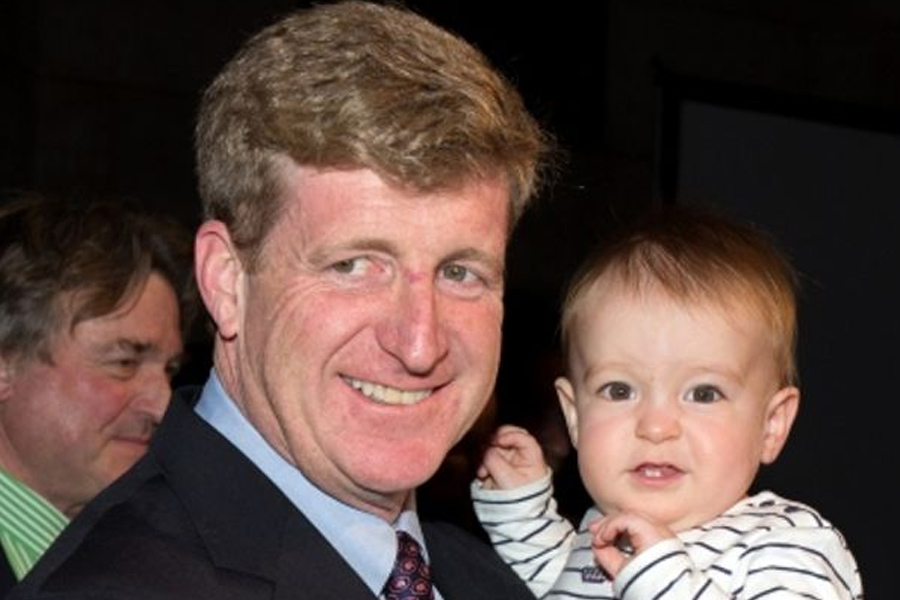
In public photos, he appears as a smiling son in a stroller or a kid beside his parents at a community event. That is the extent of his public persona. He is not a celebrity with credits or a biography anchored by personal achievements. Instead, his story is the quiet rhythm of growing up within a family that has long engaged with education, mental health advocacy, and public life.
Immediate Family
Owen is the son of Patrick J. Kennedy and Amy Kennedy. Patrick served as a U.S. Representative for Rhode Island and later became a leading advocate for mental health and addiction reform. Amy is an educator and mental health advocate in her own right, and she mounted a congressional run in New Jersey in 2020. Together they form a household that often blends public service with the private duties of parenting.
He is one of five children. Owen’s siblings are Harper, Nora, Nell, and Marshall Patrick Kennedy. In family coverage, the children often appear together, the kind of ensemble that makes birthdays and holidays feel full. There is no elaborate public profile attached to any of them, just glimpses of regular family life anchored by two parents who have made service and health advocacy central to their work.
Paternal Heritage
Owen’s paternal grandparents are Edward M. Ted Kennedy and Joan Bennett Kennedy. That lineage carries immense historical gravity for Americans who follow politics and public history. Yet for Owen, these names are part of a family tree rather than a professional choice. Ted Kennedy’s decades in the Senate created a legacy that enthusiasts and scholars discuss, but Owen is the next generation who will grow up hearing stories from a branch of the Kennedy family familiar with national milestones, public victories, and private challenges.
The broader paternal heritage includes the iconic names of Joseph P. Kennedy Sr. and Rose Fitzgerald Kennedy as great-grandparents. This line connects Owen to one of the most discussed American families of the twentieth century. It is a heritage like a river, long and wide, whose currents of service, ambition, and resilience have shaped national conversations for generations.
Maternal Roots
On his mother’s side, Owen’s grandparents are Leni Savell and Jerry Savell. They are publicly described as teachers and civic figures, a reminder that community influence can be as powerful in classrooms and local initiatives as it is in capitols. Amy’s background in education and mental health is not an isolated path, but rather part of a family emphasis on civic involvement, learning, and the wellbeing of others.
This maternal thread adds texture to Owen’s upbringing. It places him at the intersection of national political heritage and local community stewardship. The result feels grounded and balanced, like a sturdy tree whose roots spread in two distinct directions yet nourish the same trunk.
Aunts, Uncles, and Cousins
Owen’s paternal aunt was Kara Kennedy, remembered for her kindness and courage. Kara’s children, Grace Kennedy Allen and Max Greathouse Allen, are part of Owen’s extended cousin network. His paternal uncle is Ted Kennedy Jr., who has carried forth the family’s ethos of engagement and advocacy.
These relatives populate the branches beyond Owen’s immediate circle. They are familiar names to those who follow public profiles, but in Owen’s world they exist as family ties. The significance lies less in headlines and more in connections that are felt at reunions and family gatherings, the places where heritage is shared as stories and photographs.
The Child at the Center
For all the names and history we can list, Owen’s public identity is the simplest part of the narrative. He is a child. He does not have a professional career, a public agenda, or personal controversies. Public mentions remain anchored in family appearances and milestones. When his parents mark a birthday or share a holiday photograph, Owen emerges in brief, warm glimpses. That restraint is healthy. Childhood should be for discovery, schoolwork, and play, not the constant glare of a spotlight.
In the context of modern public life, this measured presence feels wise. The Kennedy name carries weight, but in Owen’s case it is a gentle echo, not a megaphone.
Moments and Milestones
The earliest public note of Owen’s life is his birth in April 2012. Over the years that followed, he appeared in family images and profiles that referenced his parents’ advocacy and community activity. As the family grew, he became the middle presence, with an older sister ahead and younger siblings behind. When his youngest brother arrived in 2018, Owen’s role as big brother expanded. These are the markers of ordinary childhood, yet they carry a certain glow because of the family’s ongoing commitment to public issues, especially mental health.
From time to time, photos show him at events or celebrations with his parents. They are snapshots, a photographic way of saying that the life of a public advocate includes a circle of private joy.
The Weight and Lightness of a Famous Name
The Kennedy lineage is like a constellation. You recognize the shape, then discover new stars each time you look. Owen occupies one of the newer points in that constellation. His existence is meaningful precisely because it is still unfolding. He embodies both continuity and possibility, an heir to traditions of service whose future will be determined by his own interests and choices.
The tone of his public mentions suggests a household that values care, learning, and advocacy. Taken together, his parents’ paths show how mental health and education have become central to their work. In that environment, Owen grows up with conversations about compassion and resilience as dinner-table staples.
What Owen’s Story Says About Family
When I trace the lines of Owen’s family, I see more than famous names. I see a layered portrait of American civic life, where national debates meet classroom discussions and family bedtime stories. The past is present in the surnames, yet the present is defined by five children who are learning, playing, and growing within a household that treats service as a daily practice.
That balance is not a headline. It is the heart of a family.
FAQ
Who is Owen Patrick Kennedy?
Owen Patrick Kennedy is the son of Patrick J. Kennedy and Amy Kennedy. He was born on April 15, 2012, and appears in public primarily in family photographs and mentions connected to his parents’ work and milestones.
Does Owen have a public career?
No. Owen is a minor and does not have a public career or professional credits. Public references to him focus on family life rather than personal achievements.
Who are Owen’s siblings?
Owen is one of five children. His siblings are Harper, Nora, Nell, and Marshall Patrick Kennedy. Family coverage often includes the children together.
Who are Owen’s grandparents?
On his paternal side, his grandparents are Edward M. Ted Kennedy and Joan Bennett Kennedy. On his maternal side, his grandparents are Leni Savell and Jerry Savell.
How is Owen connected to other well known members of the Kennedy family?
Owen is part of the broader Kennedy family line. His paternal great-grandparents include Joseph P. Kennedy Sr. and Rose Fitzgerald Kennedy. His extended family includes relatives such as Kara Kennedy and Ted Kennedy Jr., with cousins like Grace Kennedy Allen and Max Greathouse Allen.
Is there any public controversy or gossip about Owen?
No. Public mentions of Owen focus on family events and photographs. There are no credible controversies associated with him.
What do Owen’s parents do?
Patrick J. Kennedy is a former U.S. Representative and a prominent advocate for mental health and addiction reform. Amy Kennedy is an educator and mental health advocate who has been active in community initiatives and ran for Congress in New Jersey in 2020.
What is publicly known about Owen’s early life?
Public information centers on his birth in April 2012 and occasional appearances in family photographs and profiles that discuss his parents. There are no detailed personal disclosures about his private life.
Does Owen appear at public events?
He appears occasionally with his parents in family photos or at events where such images are shared publicly. These are limited and often celebratory rather than formal public appearances.
How does Owen’s family background shape his public presence?
His background places him within a well known American family associated with public service. Even so, his public presence remains modest and family centered, reflecting a choice to keep childhood private while honoring a legacy of advocacy and community engagement.