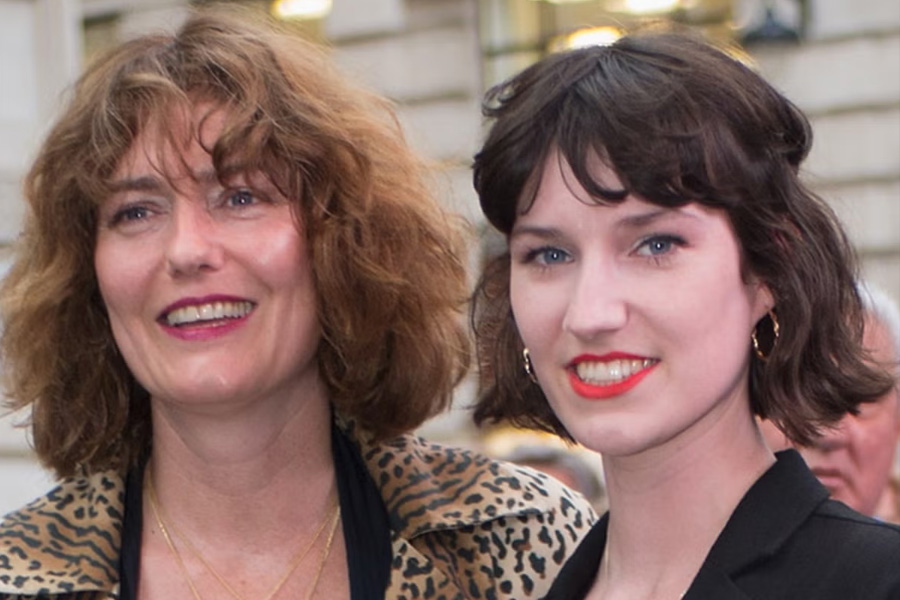
A life traced in scissors and ink
I think of Poppy Chancellor and I see a blade catching light. Clean cuts, bold silhouettes, paper turning into story. Poppy was a British illustrator and papercut artist whose work felt both festive and brave, equal parts celebration and confession. She built an art practice that moved from kitchen table to cultural institutions, then widened into a community space for grief. The arc of her life was brief, 1987 to 2023, yet bright enough to leave afterimages on everyone who followed her craft.
Poppy, born on June 4, 1987, grew up with art in the weather. Anna Chancellor, an actress, raised her in a language-, presence-, and performance-focused family. Jock Scot, a cult performance poet, was her father. He was loving and charismatic. Poppy’s work was inevitable with such parents, but always her own. Kingston University taught her illustration, and the Royal Drawing School improved her observation. Drawing matched scissors’ speed. A voice emerged from the meeting.
The cut as a sentence
Papercutting looks simple from a distance. A sheet, a knife, a steady hand. Up close, it is choreography, breath control, a chess match with negative space. Poppy mastered those moves. Her designs were unapologetically graphic, often black on white, shaped by modern folk energy. Bold florals, talismanic symbols, flirtatious declarations, and the electric buzz of parties and rituals. She made cards, prints, banners, and large-scale pieces that felt like windows. People walked through them.
Her practice traveled. She taught workshops that made papercutting feel democratic and joyful. Museums and cultural venues hosted her sessions, and festivals welcomed her with scissors safely sheathed until the first cut. In classes, she turned fear of the blank page into delight. Students who had not picked up a craft knife in years found themselves slicing paper with calm precision, surprised at what they could do.
Poppy published a book, Cut It Out!, a practical manifesto for anyone itching to make pictures with a blade instead of a brush. It showed patterns, guided beginners, and captured the verve of her approach. Brand collaborations and commissions followed. Her small business became a recognizable creative identity. Poppy’s Papercuts was more than a shopfront. It was a style.
Making a place for grief
After her father died in 2016, Poppy did not keep grief hidden in a drawer. She made art that looked directly at loss, and then she made something larger. The Griefcase emerged as a project and a community, a way to meet others who were walking in dark weather and to offer projects, language, and companionship. It began with conversations and grew into in-person meetups and online spaces where grief did not have to be tidied away. Just as she taught papercutting, she taught the rituals of care. The Griefcase invited people to bring their stories without apology. It was an artist’s response to heartbreak, practical and tender.
In talks and events, Poppy connected creativity with mourning. A knife on paper became a metaphor for absence. The piece taken away mattered as much as what remained. I remember watching her explain how a cut creates both edge and opening. It felt like a lesson about love.
Family ties and a wider lineage
Poppy’s immediate family is well known. Her mother, Anna Chancellor, is a celebrated actor whose reflections on motherhood and loss resonated deeply after Poppy’s death. Her father, the poet Jock Scot, left a vivid cultural footprint. Together, their influences gave Poppy a sense of theater and language that merged seamlessly with her visual practice.
Beyond her parents, Poppy stood within a broader Chancellor family network that connects to journalists, writers, and public servants across generations. The Chancellor lineage includes figures like Christopher Chancellor, a journalist and editor in the mid-20th century, and Sylvia Mary Paget, part of a well documented family with literary and historical associations. Names such as John Chancellor and Mary Alice Jolliffe appear in the family’s older branches, alongside William Jolliffe in related lines. These connections paint a picture of a family with roots in public life, literature, and service.
It is worth noting that extended genealogy stretches far and can get intricate fast. Public profiles frequently emphasize Poppy’s immediate parentage and her own career, while deeper family trees show names from past generations. When I think about Poppy’s place in that constellation, I see a pattern running through the arts. Words, pictures, and a certain public spiritedness recur like motifs in an heirloom fabric.
Work at human scale
What I loved about Poppy’s trajectory is how human sized it felt. She crafted pieces that fit in an envelope and still spoke loudly. She built a business that looked like a studio, not a factory. Workshops were intimate. Shop updates felt personal. Social media was not just a storefront. It was a table where she set out tools and said, join me.
That intimacy carried into her advocacy. The Griefcase was not a campaign with slogans. It was care offered at body temperature. Poppy made grief public without making it performative. In a culture that often demands neatness from the bereaved, she allowed ragged edges. That permission is a form of art.
Final months, lasting light
In 2023, Poppy faced acute myeloid leukemia. Reports point to a spring diagnosis following recurring infections, a sudden descent into treatment, and then a summer of flux. She died on 29 September 2023 at the age of 36. News of her death moved quickly through the creative community and far beyond. Tributes multiplied in galleries, studios, and living rooms where her prints hang. People shared her cut paper as if holding up lanterns.
I still see her silhouettes when I pass a window at dusk. A figure. A leaf. A phrase that looks like ribbon. She had a knack for giving an image the right weight. Not too heavy, not too faint. The memory of that balance is part of her legacy. The rest lives in the hands of those she taught, the communities she built, and the loved ones who carry her forward.
FAQ
Who was Poppy Chancellor?
Poppy Chancellor was a British illustrator and papercut artist known for bold graphic work, lively workshops, and a community project called The Griefcase that supported people experiencing bereavement.
What did she study and where did she train?
She studied illustration at Kingston University and continued her training at the Royal Drawing School, grounding her papercutting practice in strong drawing and design.
What is The Griefcase?
The Griefcase is a bereavement support project founded by Poppy that combined creative activities with peer connection. It included meetups and online community spaces where people could share experiences of loss.
Did Poppy publish a book?
Yes. She authored Cut It Out!, a practical guide to papercutting that offered patterns, tips, and projects for beginners and enthusiasts.
Who are Poppy Chancellor’s parents?
Her mother is the actor Anna Chancellor. Her father was the performance poet Jock Scot, who died in 2016.
Did she have wider family connections of note?
Poppy belongs to a broader Chancellor family with roots in British public life, journalism, and literature. Names such as Christopher Chancellor and Sylvia Mary Paget appear in that extended lineage, alongside older generation connections like John Chancellor, Mary Alice Jolliffe, and William Jolliffe. These reflect the family’s documented historical branches rather than day to day relationships in Poppy’s life.
Where did she teach and exhibit her papercutting work?
Poppy ran workshops at prominent cultural venues and festivals, taught widely to make papercutting accessible, and showed work through her studio practice and collaborations.
How did Poppy Chancellor die?
She died of acute myeloid leukemia on 29 September 2023 at the age of 36.
How is she remembered today?
She is remembered for her distinctive papercut style, generous teaching, and compassionate leadership through The Griefcase. Friends, students, and admirers continue to share her work and stories, keeping her influence alive in classrooms, studios, and community circles.